Do Keywords in URLs Help SEO? What the Evidence Says
Does putting your keyword in the URL actually help rankings? Here's what Google has said, how much it matters, and how to use keywords in slugs the right way.
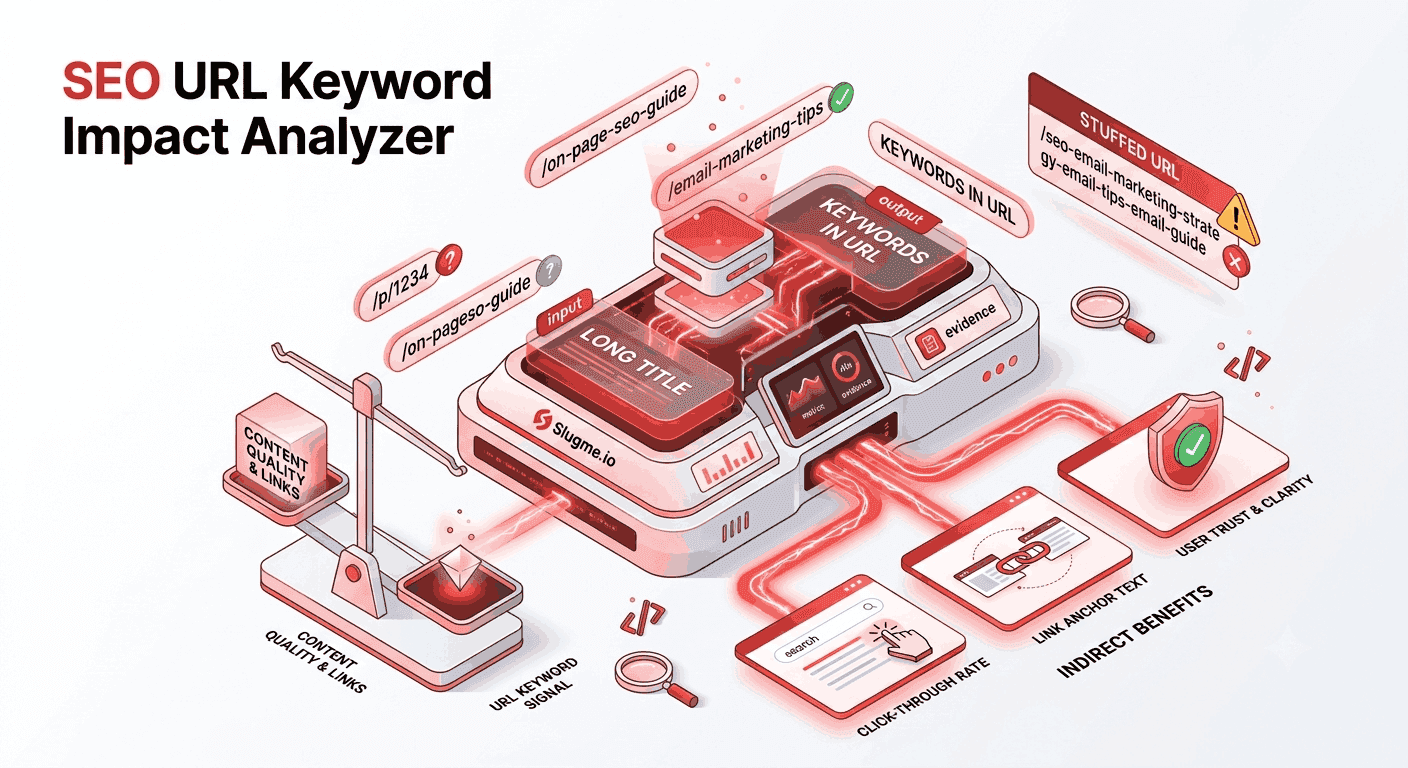
"Put your keyword in the URL" is classic SEO advice. But is it true, and how much does it really matter? Let's separate the evidence from the myth and land on a practical rule you can actually use.
The short answer
Keywords in the URL are a small, genuine signal — not a major ranking factor. They help, but mostly in indirect ways. You should include your main keyword in the slug, but you shouldn't obsess over it or stuff it.
What Google has actually said
Google representatives have described the URL as a very lightweight ranking factor. The words in your slug can give Google a small early hint about the page's topic, but they're nowhere near as important as your content, title, and links.
So the honest framing is: a keyword-rich URL can help a little directly, and it definitely helps indirectly. Both are worth having when the cost is basically zero.
The indirect benefits (which matter more)
1. Click-through rate
Your URL appears in the search snippet, right under the title. A slug like /url-slug-best-practices looks more relevant than /post-4471, and a more relevant-looking result earns more clicks. Higher CTR is good in its own right.
2. Anchor text when people link to you
When someone copies your raw URL as a link (very common), the keywords in the slug effectively become part of the anchor text. /email-marketing-guide carries more meaning as a bare link than /p/8821.
3. User trust and orientation
A descriptive URL tells visitors where they are and where a link will take them. That clarity builds trust and reduces bounce.
The right way to use keywords in a slug
- Include your primary keyword once, ideally near the start.
Page about "email marketing for beginners" /email-marketing-beginners - Don't stuff. Repeating the term reads as spam and helps nothing:
Avoid: /email-marketing-email-tips-email-guide-email - Keep it natural and readable. The slug should look like a phrase a human would write.
- Trim to the essentials. Pair keyword inclusion with short slug length and stop-word removal.
A common myth: exact-match URLs guarantee rankings
They don't. Buying bestrunningshoes.com/best-running-shoes won't outrank genuinely better content. Exact-match keywords in domains and URLs were over-weighted years ago; today, content quality, relevance, and authority dominate. Use keywords in URLs as a small finishing touch, not a strategy.
Should you change old URLs just to add a keyword?
Usually not. If a page already ranks, the risk of changing the slug (even with a 301 redirect) often outweighs the tiny benefit of a slightly better keyword match. Add keywords when you're creating new URLs; leave well-performing old ones alone.
The takeaway
Keywords in URLs help — modestly and mostly indirectly through clicks, link anchor text, and trust. Include your main keyword once, keep the slug short and readable, and never stuff. It's a small, free optimization worth doing on every new page.
The simplest way to get a clean, keyword-focused slug is to generate it from your title, which keeps the important words and strips the filler.