What Is a URL Slug? A Complete Guide with Examples
A URL slug is the readable part of a web address that names a page. Learn what slugs are, why they matter for SEO, and how to write them well — with clear examples.
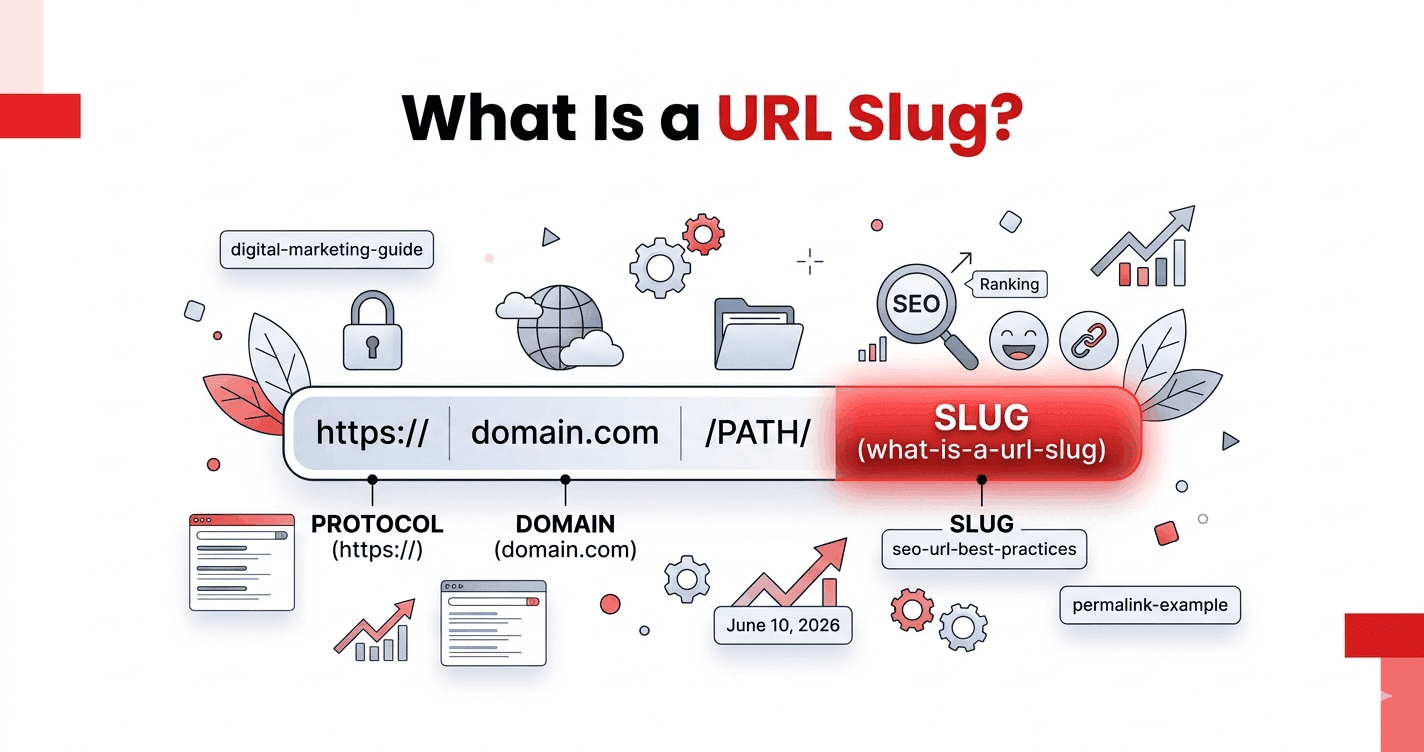
If you have ever published a blog post, opened a product page, or shared a link, you have used a URL slug — even if you never knew its name. The slug is one of the smallest parts of a web address, yet it quietly shapes how both people and search engines understand your page.
This guide explains exactly what a URL slug is, where it sits in a URL, why it matters, and how to create slugs that are clean, readable, and search-friendly.
What is a URL slug, exactly?
A URL slug is the part of a web address that comes after the domain name and identifies a specific page in a human-readable way. It is the unique, descriptive tail end of a URL.
Take this address:
https://slugme.io/blog/what-is-a-url-slug
https://is the protocolslugme.iois the domain/blog/is the pathwhat-is-a-url-slugis the slug
The slug is the bit that tells you — at a glance — that this page is about what a URL slug is. Swap it for /blog/page-2847 and the meaning vanishes.
Why URL slugs matter
A slug looks like a tiny detail, but it does real work in four areas.
1. Search engine optimization (SEO)
Search engines read the words in your URL. A descriptive slug that contains your target keyword gives Google an extra, early signal about the page's topic. It won't outrank great content on its own, but a clean slug reinforces relevance and looks trustworthy in the results.
2. User experience
People read URLs too. A slug like summer-running-shoes is instantly understandable, while prod?id=99124&cat=7 is not. Readable slugs help users decide whether to click and feel confident about where a link will take them.
3. Shareability
Clean slugs survive being copied into emails, chat apps, and social posts. Short, word-based slugs are easier to read aloud, type by hand, and remember.
4. Click-through rate
In search results and link previews, the URL is visible right under the title. A meaningful slug makes the whole listing look more relevant and can nudge more people to click.
What does a good URL slug look like?
A well-formed slug follows a handful of consistent rules:
- Lowercase only —
Clean-URLandclean-urlcan be treated as different addresses, so stick to lowercase. - Hyphens between words —
url-slug-generator, noturl_slug_generatororurlsluggenerator. - No special characters — drop punctuation, emoji, and symbols that break or get encoded into ugly
%20-style strings. - Short and focused — three to five meaningful words is the sweet spot.
- Keyword-rich, not stuffed — include the main term once; don't repeat it.
- No stop words (usually) — small words like the, a, and, of can often be removed for a tighter slug.
Here is the difference in practice:
| Page title | Weak slug | Strong slug |
|---|---|---|
| The Ultimate Guide to On-Page SEO | /the-ultimate-guide-to-on-page-seo-2026!! |
/on-page-seo-guide |
| 10 Best Running Shoes for Beginners | /post?id=5521 |
/best-running-shoes-beginners |
Slug vs. permalink vs. path: clearing up the jargon
These three words get mixed up constantly:
- A slug is the editable, page-identifying segment (
what-is-a-url-slug). - A path is everything after the domain, which may include folders (
/blog/what-is-a-url-slug). - A permalink is the full, permanent URL to a page (
https://slugme.io/blog/what-is-a-url-slug).
In short: the slug is part of the path, and the path is part of the permalink.
How to create a clean slug
You can write slugs by hand, but it's easy to miss a stray capital letter, an accented character, or a sneaky symbol. The reliable approach is to start from your title and let a tool do the cleanup:
- Take your page title, e.g. "The Ultimate Guide to On-Page SEO in 2026".
- Lowercase everything.
- Remove stop words → ultimate guide on-page seo 2026.
- Replace spaces with hyphens and strip punctuation →
ultimate-guide-on-page-seo-2026. - Trim it down to the essentials →
on-page-seo-guide.
Slugme.io does all of this instantly, in your browser, and handles tricky cases like accented letters and non-Latin scripts that naive find-and-replace breaks.
Common slug mistakes to avoid
- Dates and IDs that add no meaning —
/2026/03/post-1ages badly and tells readers nothing. - Keyword stuffing —
/cheap-shoes-buy-shoes-shoes-onlinelooks like spam. - Changing slugs without redirects — if you must rename a slug, set up a 301 redirect so existing links and rankings survive.
- Overly long slugs — a 12-word slug is hard to read and gets truncated in search results.
Key takeaways
A URL slug is the human-readable identifier at the end of a web address. Good slugs are lowercase, hyphenated, short, and descriptive — and they help your SEO, your click-through rate, and your readers all at once.
The fastest way to get them right every time is to generate them automatically. Paste your title into the URL slug generator and copy a clean, ready-to-publish slug in one click.